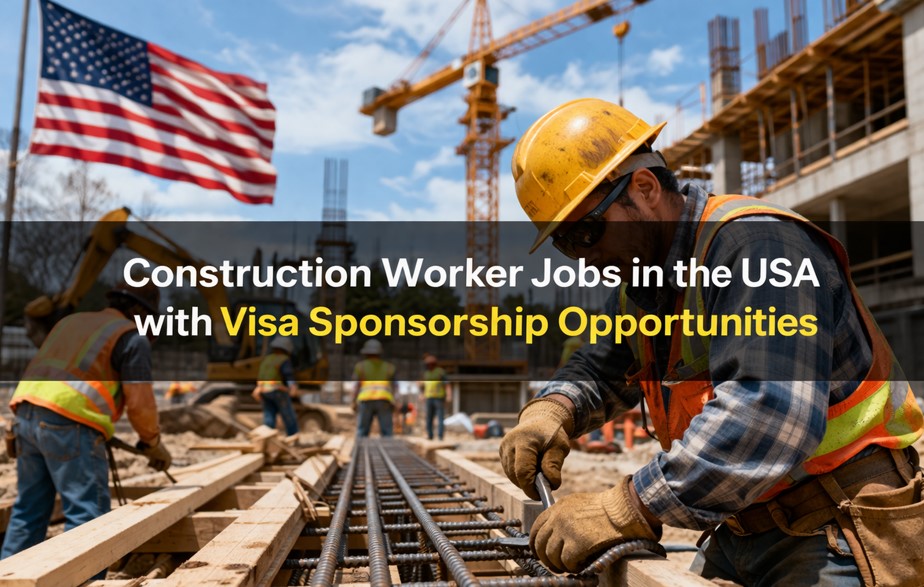
Searching for Construction Worker Jobs in the USA with visa sponsorship is a journey that could lead to a life-changing career move.
Construction Worker Jobs in the USA are currently seeing an unprecedented surge in demand, as the nation faces a critical labor shortage with a projected need for 349,000 new workers in 2026 alone.
This gap between the booming infrastructure projects and the available local workforce has opened a unique window of opportunity for international skilled tradespeople and laborers to find stable, high-paying work through various visa sponsorship programs.
The State of the American Construction Industry in 2026
The state of the Construction Worker Jobs in the USA in 2026 is defined by a paradox of cooling traditional markets and white-hot infrastructure demand.
Construction Worker Jobs in the USA are currently at the center of a national “Efficiency Mandate,” where a shrinking pool of veteran talent is being asked to deliver an increasingly complex and high-tech array of projects.
While high interest rates have slightly dampened the residential housing boom of previous years, the industrial and mission-critical sectors are growing at a rate that the domestic workforce simply cannot sustain.
For the international worker, this means that the opportunity isn’t just about “finding a job”, it is about filling a critical structural void in the American economy.
The Massive Labor Gap: 349,000 Workers Needed
The most pressing reality of the 2026 construction landscape is the staggering volume of open positions that remain unfilled.
According to the Associated Builders and Contractors (ABC), the industry must attract approximately 349,000 net new workers this year just to keep pace with current project demands.
This figure is actually a “dip” from the half-million workers needed in previous years, but it represents a more dangerous phase: a core shortage of specialized, mid-to-senior level tradespeople.
With nearly 92% of U.S. contractors reporting difficulty in filling positions, the industry is effectively operating at a deficit. This labor gap is the primary reason why many firms are now turning toward international recruitment and visa sponsorship as a survival strategy rather than a last resort.
The “Silver Tsunami”: A Crisis of Retirement
A significant driver of the demand for construction labor is the demographic shift often referred to as the “Silver Tsunami.” In 2026, the industry is losing its most experienced hands at an alarming rate; roughly one in five construction workers is over the age of 55.
As these Baby Boomers retire, they take decades of institutional knowledge and master-level skills with them. Because the younger generation of Americans has historically been steered toward “desk jobs,” there aren’t enough local apprentices to fill the void.
This has created a massive opening for international workers who already possess 5 to 10 years of experience in trades like masonry, plumbing, and structural steelwork to step into high-paying, “journey-level” roles immediately.
The Data Center and AI Infrastructure Boom
Perhaps the most transformative force in 2026 is the explosive growth of data centers fueled by the Artificial Intelligence (AI) revolution. Since AI requires immense computing power, tech giants are spending billions to build “hyperscale” data campuses across the country.
These projects are not typical buildings; they are incredibly complex industrial facilities that require a vast number of electricians, HVAC specialists, and network infrastructure installers. Data center spending is projected to grow by 20% this year alone.
Because these projects are “mission-critical” and have strict deadlines, contractors are often willing to pay a premium, and navigate the complexities of visa sponsorship, to secure the specialized talent needed to bring these “brains of the internet” online.
Reshoring and the Rise of “Megaprojects”
The U.S. is currently in the midst of a manufacturing “reshoring” movement, where essential goods like semiconductors and electric vehicle batteries are being brought back to domestic soil.
These “megaprojects”, often costing upwards of $10 billion each, are being constructed in various regions, creating localized labor vacuums. A single semiconductor “fab” (fabrication plant) can require 5,000 to 7,000 workers at the peak of construction.
When a project of this scale breaks ground, it often exhausts the entire local supply of skilled labor within a 200-mile radius.
To prevent these vital projects from stalling, the federal government and private developers are increasingly supportive of legal immigration pathways that bring in skilled industrial workers from abroad.
Technology as a Workforce Multiplier
In 2026, technology is no longer a luxury on the job site; it is a necessity used to bridge the labor gap. From “Agentic AI” that optimizes project schedules to robotic “cobots” that assist with heavy lifting and welding, the American construction site is more high-tech than ever.
However, these machines don’t replace humans, they require a new kind of “tech-savvy” construction worker to operate them. Workers who understand Building Information Modeling (BIM) or can work alongside robotic layout tools are in the highest demand.
This shift has leveled the playing field for international workers who have been trained in modern, tech-forward construction environments in Europe, Asia, or South America, making them highly attractive to U.S. employers looking for “future-ready” talent.
Construction Worker Jobs in the USA with Visa Sponsorship Opportunities
The search for Construction Worker Jobs in the USA often leads to a wide variety of specialized roles, each with its own set of demands and financial rewards.
In 2026, the diversity of the American building sector means that whether you are a generalist or a highly trained specialist, there is likely a niche for you.
Employers are increasingly looking beyond their borders to find dedicated professionals who can help meet the nation’s ambitious infrastructure goals.
Below are some key roles currently offering significant visa sponsorship opportunities, ranging from entry-level labor to highly technical management positions.
1. General Construction Laborer
Average Salary: $35,000 – $50,500 per year
As one of the most accessible Construction Worker Jobs in the USA, the general laborer role serves as the backbone of every job site.
These workers are responsible for the physical preparation and maintenance of the site, including clearing debris, unloading heavy materials, and setting up temporary structures like scaffolding.
In 2026, many large-scale firms are utilizing the H-2B visa program to hire hundreds of laborers at once for seasonal projects. While the work is physically demanding and requires high stamina, it is an excellent “foot in the door” for international workers.
Many employers provide on-the-job training, allowing laborers to eventually specialize in more technical trades while earning a competitive wage and often receiving housing assistance as part of their sponsorship package.
2. Electrician (Industrial and Commercial)
Average Salary: $58,000 – $88,000 per year
Electricians are currently among the most sought-after professionals in the American labor market due to the rapid expansion of renewable energy and massive data center projects. For those seeking Construction Worker Jobs in the USA with a background in electrical systems, the rewards are substantial.
These roles involve installing complex wiring, troubleshooting high-voltage circuits, and ensuring all work meets the rigorous National Electrical Code (NEC). Because this is considered a highly skilled trade, many employers are willing to sponsor workers for EB-3 permanent residency to ensure they retain this talent long-term.
Skilled electricians who understand smart-building technology or solar grid integration are finding themselves in a position where they can command top-tier salaries and comprehensive benefit packages.
3. Heavy Equipment Operator
Average Salary: $55,000 – $92,000 per year
Operating massive machinery like excavators, bulldozers, and graders requires a level of precision and safety awareness that is highly valued in the U.S. infrastructure sector.
These Construction Worker Jobs in the USA are vital for the initial phases of any major project, from highway expansions to the foundations of new skyscrapers. Sponsorship for equipment operators is common in 2026 as domestic shortages of certified drivers persist.
International candidates with valid certifications from their home countries often find that U.S. employers will assist with the necessary American certifications and safety training.
The role offers a higher level of pay than general labor and often includes significant overtime opportunities during peak construction seasons.
4. Carpenter (Rough and Finish)
Average Salary: $52,000 – $78,000 per year
Carpentry remains a cornerstone of the American building industry, and the demand for both “rough” carpenters (who build the structural frames) and “finish” carpenters (who handle cabinetry and trim) is at an all-time high.
For those looking for Construction Worker Jobs in the USA, carpentry offers a versatile career path that spans residential housing and commercial development.
H-2B visas are frequently used for large framing crews, while specialized finish carpenters may qualify for EB-3 sponsorship due to the high level of craftsmanship required.
In 2026, with the push for more sustainable “mass timber” buildings, carpenters who have experience with engineered wood products are seeing a particular surge in recruitment interest from high-end U.S. developers.
5. Welder (Structural and Pipe)
Average Salary: $48,000 – $80,000 per year
Welding is a critical skill for the American industrial resurgence, particularly in the construction of bridges, pipelines, and manufacturing plants.
These Construction Worker Jobs in the USA require a high degree of technical certification, such as AWS (American Welding Society) standards, which many sponsoring employers will help international workers obtain.
Whether performing MIG, TIG, or Stick welding, these professionals work in some of the most challenging environments to ensure the structural integrity of the nation’s infrastructure.
Due to the specialized nature of the work, welders often enjoy some of the strongest legal protections and highest hourly rates, with many firms offering long-term sponsorship to secure a steady pipeline of talent for multi-year industrial projects.
6. Plumber and Pipefitter
Average Salary: $54,000 – $82,000 per year
Every modern building relies on intricate water, gas, and waste systems, making plumbers and pipefitters indispensable. In the context of Construction Worker Jobs in the USA, plumbing is a “recession-proof” trade that offers immense stability.
International plumbers often find sponsorship through companies specializing in large-scale residential complexes or industrial facilities. The work involves reading blueprints, installing fixtures, and pressure-testing systems to ensure they are leak-free and code-compliant.
In 2026, there is a specific focus on “green plumbing” and water conservation technologies, and workers who have experience with high-efficiency systems are being recruited aggressively by firms that prioritize sustainable building certifications like LEED.
7. Concrete Finisher and Mason
Average Salary: $46,000 – $72,000 per year
Masonry and concrete work are the literal foundation of the industry, and skilled finishers are in high demand to ensure that everything from sidewalks to high-rise floors is perfectly level and durable.
These Construction Worker Jobs in the USA are often filled by international teams who specialize in large-pour projects or intricate brickwork. Because concrete work is highly seasonal in many parts of the U.S., it is one of the most common roles for the H-2B visa program.
Workers are expected to handle heavy materials, operate power trowels, and work quickly before the material sets.
Employers frequently provide housing and transportation for masonry crews, making it a popular choice for international workers looking for consistent, seasonal employment.
8. Roofer and Siding Installer
Average Salary: $43,000 – $70,000 per year
The demand for roofers in the USA is driven by both new construction and the constant need for repairs following weather events. For those seeking Construction Worker Jobs in the USA, roofing is a high-energy role that requires comfort with heights and a strong work ethic.
In 2026, there is a growing trend toward “cool roofs” and integrated solar shingles, meaning roofers are becoming more tech-integrated than in previous decades. Many roofing companies utilize H-2B sponsorship to bring in experienced crews for the busy summer and fall months.
While the work is physically taxing, it offers a fast-paced environment and the opportunity to earn significant bonuses based on project completion speeds.
9. HVAC Technician
Average Salary: $52,000 – $84,000 per year
Heating, Ventilation, and Air Conditioning (HVAC) technicians are the climate control experts of the construction world. These Construction Worker Jobs in the USA are vital for both residential comfort and the precise cooling requirements of modern data centers.
Sponsoring employers look for technicians who can not only install ductwork and units but also handle the complex electrical and refrigerant components of the system.
In 2026, the shift toward heat pumps and high-efficiency electric heating has created a specialized market where international workers with “clean energy” experience are highly valued. HVAC roles often offer year-round work and a path toward management or specialized system design.
10. Construction Foreman / Site Supervisor
Average Salary: $68,000 – $98,000 per year
For those with leadership experience, a role as a foreman or site supervisor is a prime target within the landscape of Construction Worker Jobs in the USA. This position bridges the gap between the workers on the ground and the project managers in the office.
A sponsored foreman is responsible for managing daily schedules, enforcing safety protocols, and ensuring that the quality of work meets the project’s specifications.
Because this role requires a deep understanding of U.S. labor laws and safety standards (OSHA), many employers will sponsor experienced international leads for an EB-3 visa or even an H-1B if they possess a relevant degree.
This is a high-responsibility role that rewards those who can motivate a diverse team and keep a project on schedule.
11. Project Manager (Construction)
Average Salary: $85,000 – $135,000 per year
Project management is the strategic hub of any construction endeavor, involving the oversight of budgets, timelines, and multi-disciplinary teams. While often office-based, these are essential Construction Worker Jobs in the USA that frequently qualify for H-1B visa sponsorship.
Employers look for candidates with a degree in construction management or civil engineering and a proven track record of delivering complex projects. In 2026, project managers are increasingly using AI-driven scheduling and BIM (Building Information Modeling) software to optimize site efficiency.
For international professionals with high-level technical skills and fluent English, this role offers some of the highest salaries in the industry and a clear path to long-term residency.
12. Construction Inspector
Average Salary: $56,000 – $86,000 per year
Construction inspectors play a vital role in ensuring that every element of a build complies with safety codes and contract specifications. These Construction Worker Jobs in the USA are often found within government agencies or large private consulting firms.
Inspectors examine everything from the depth of a foundation to the quality of the electrical wiring. Sponsorship for this role is common in 2026 for those with extensive experience in civil engineering or specialized trade inspection.
It is a highly respected position that requires a keen eye for detail and the ability to read complex blueprints. For international workers, this role offers a less physically demanding alternative to the trades while still remaining at the heart of the construction process.
Essential Requirements for Securing Construction Worker Jobs in the USA
Securing Construction Worker Jobs in the USA is a multi-step process that requires more than just physical strength or technical skill.
Because the U.S. government maintains strict oversight of the labor market, Construction Worker Jobs in the USA for international candidates involve a rigorous verification of identity, skill levels, and health status.
To successfully navigate the transition from your home country to an American job site, you must meet a specific set of criteria that satisfies both the Department of Labor (DOL) and the Department of Homeland Security (DHS). Below is an expansion of the essential requirements you will need to fulfill.
1. Valid and Current Travel Documentation
Before you can even begin the application process for Construction Worker Jobs in the USA, you must possess a valid international passport from your country of citizenship.
This passport should ideally have at least two to three years of validity remaining, as the visa processing and the initial contract period often span 12 to 24 months. U.S. consular officers are hesitant to issue work visas to passports that are nearing their expiration date.
Additionally, you should ensure that your name and date of birth are consistent across all your legal documents, including birth certificates and previous work permits, as any discrepancy can trigger a “Request for Evidence” (RFE) from immigration authorities, which can delay your deployment by several months.
2. Proof of Specific Vocational Training or Experience
While entry-level roles exist, the most successful candidates for Construction Worker Jobs in the USA are those who can provide documented proof of their expertise. This includes vocational diplomas, apprenticeship completion certificates, or specialized licenses in trades like welding, plumbing, or electrical work.
For the EB-3 “Skilled Worker” category, you must demonstrate at least two years of full-time experience in your field. This is typically proven through “Experience Letters” from past employers on official company letterhead, detailing your job title, dates of employment, and specific duties performed.
If you are applying for a highly technical role, having certifications that align with American standards (such as AWS for welding or NCEES for engineering) will significantly increase your chances of being selected for sponsorship.
3. English Language Proficiency (Functional and Technical)
To maintain safety and efficiency on a high-stakes job site, a functional command of the English language is a non-negotiable requirement for most Construction Worker Jobs in the USA.
You do not necessarily need to be a fluent orator, but you must be able to understand safety briefings, read technical blueprints, and communicate effectively with supervisors and teammates.
On an American construction site, being able to understand OSHA (Occupational Safety and Health Administration) warnings and standard operating procedures is vital for preventing accidents.
While some H-2B roles for large crews might allow for a translator or a bilingual foreman, individual sponsorship for long-term roles almost always requires an interview at the U.S. Embassy where you must demonstrate your ability to speak and understand English clearly.
4. Clean Criminal Record and “Good Moral Character”
The U.S. government performs extensive background checks on every individual applying for work-authorized visas.
To qualify for Construction Worker Jobs in the USA, you will likely be required to provide a “Police Clearance Certificate” or a “No Criminal Record” document from every country where you have lived for more than six months since the age of 16.
Crimes involving “moral turpitude,” drug-related offenses, or previous immigration violations (such as overstaying a visa in another country) are often grounds for immediate disqualification.
U.S. employers are looking for reliable, law-abiding individuals who will not pose a security risk or a liability to the company, so maintaining a clean legal record is essential for the duration of your application.
5. Medical Fitness and Physical Capability
Construction is a physically demanding industry, and Construction Worker Jobs in the USA often involve working in extreme temperatures, lifting heavy loads, and standing for long periods.
As part of the visa process, especially for permanent residency (Green Card) paths, you must undergo a medical examination by a U.S. Department of State-approved physician.
This exam ensures you are up to date on required vaccinations and do not have communicable diseases that would prevent entry. Beyond the legal medical exam, many employers require a “Fit for Duty” test or a drug screening before you can set foot on the job site.
Candidates must be prepared to demonstrate that they can safely perform the manual tasks associated with their trade without being a danger to themselves or others.
6. A Verified Job Offer from a U.S. Sponsoring Employer
The single most important requirement for securing Construction Worker Jobs in the USA from abroad is a “Bona Fide” job offer. You cannot “sponsor yourself” for a work visa; an American company must act as your petitioner.
This employer must demonstrate to the U.S. government that they are paying you the “Prevailing Wage”, the average salary for that specific job in that specific geographic area, to ensure that international hiring does not drive down wages for American workers.
The job offer must be for a full-time position and must be accompanied by a Labor Certification (PERM or LCA) approved by the Department of Labor. Finding an employer who is willing to pay the legal and filing fees associated with sponsorship is the “Golden Ticket” to starting your career in the United States.
Conclusion
The door to Construction Worker Jobs in the USA is wider now than it has been in decades. With a shortfall of nearly 350,000 workers, the American dream is being built by hands from across the globe. If you have the grit, the skill, and the patience to navigate the visa process, your next project could be on American soil.
Start by updating your resume to highlight your specific technical skills and certifications. The American dream is being built every day, and they just might need your help to finish the next skyscraper.